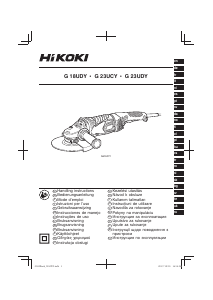
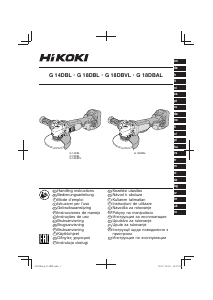
Посібник Hikoki G 14DBL Кутошліфувальна машина

Потрібен посібник для вашого Hikoki G 14DBL Кутошліфувальна машина? Нижче ви можете безкоштовно переглянути та завантажити посібник у форматі PDF українською мовою. Наразі цей продукт має 4 поширених запитання, 0 коментарів і 0 голосів. Якщо це не той посібник, який вам потрібен, будь ласка, зв’яжіться з нами.

Ваш товар несправний, а посібник не пропонує рішення? Перейдіть на Repair Café, щоб отримати безкоштовні послуги з ремонту.

Посібник

Loading…

3
English
b) Use power tools only with speci cally
designated battery packs.
Use of any other battery packs may create a risk of
injury and re.
c) When battery pack is not in use, keep it away
from other metal objects, like paper clips, coins,
keys, nails, screws or other small metal objects,
that can make a connection from one terminal to
another.
Shorting the battery terminals together may cause
burns or a re.
d) Under abusive conditions, liquid may be ejected
from the battery; avoid contact. If contact
accidentally occurs, ush with water. If liquid
contacts eyes, additionally seek medical help.
Liquid ejected from the battery may cause irritation or
burns.
6) Service
a) Have your power tool serviced by a quali ed
repair person using only identical replacement
parts.
This will ensure that the safety of the power tool is
maintained.
PRECAUTION
Keep children and in rm persons away.
When not in use, tools should be stored out of reach of
children and in rm persons.
SAFETY WARNINGS COMMON FOR
GRINDING OR ABRASIVE CUTTING-
OFF OPERATIONS
a) This power tool is intended to function as a
grinder or cut-o tool. Read all safety warnings,
instructions, illustrations and speci cations
provided with this power tool.
Failure to follow all instructions listed below may result in
electric shock, re and/or serious injury.
b) Operations such as sanding, wire brushing or
polishing are not recommended to be performed
with this power tool.
Operations for which the power tool was not designed
may create a hazard and cause personal injury.
c) Do not use accessories which are not speci cally
designed and recommended by the tool
manufacturer.
Just because the accessory can be attached to your
power tool, it does not assure safe operation.
d) The rated speed of the accessory must be at least
equal to the maximum speed marked on the power
tool.
Accessories running faster than their rated speed can
break and y apart.
e) The outside diameter and the thickness of your
accessory must be within the capacity rating of
your power tool.
Incorrectly sized accessories cannot be adequately
guarded or controlled.
f) Threaded mounting of accessories must match the
grinder spindle thread. For accessories mounted
by anges, the arbour hole of the accessory must
t the locating diameter of the ange.
Accessories that do not match the mounting hardware of
the power tool will run out of balance, vibrate excessively
and may cause loss of control.
g) Do not use a damaged accessory. Before each use
inspect the accessory such as abrasive wheels for
chips and cracks, backing pad for cracks, tear or
excess wear, wire brush for loose or cracked wires.
If power tool or accessory is dropped, inspect for
damage or install an undamaged accessory. After
inspecting and installing an accessory, position
yourself and bystanders away from the plane of
the rotating accessory and run the power tool at
maximum no-load speed for one minute.
Damaged accessories will normally break apart during
this test time.
h) Wear personal protective equipment. Depending
on application, use face shield, safety goggles or
safety glasses. As appropriate, wear dust mask,
hearing protectors, gloves and workshop apron
capable of stopping small abrasive or workpiece
fragments.
The eye protection must be capable of stopping ying
debris generated by various operations. The dust mask
or respirator must be capable of ltrating particles
generated by your operation. Prolonged exposure to
high intensity noise may cause hearing loss.
i) Keep bystanders a safe distance away from work
area. Anyone entering the work area must wear
personal protective equipment.
Fragments of workpiece or of a broken accessory may
y away and cause injury beyond immediate area of
operation.
j) Hold the power tool by insulated gripping surfaces
only, when performing an operation where the
cutting tool may contact hidden wiring.
Contact with a “live” wire will also make exposed metal
parts of the power tool “live” and could give the operator
an electric shock.
k) Position the cord clear of the spinning accessory.
If you lose control, the cord may be cut or snagged
and your hand or arm may be pulled into the spinning
accessory.
l) Never lay the power tool down until the accessory
has come to a complete stop.
The spinning accessory may grab the surface and pull
the power tool out of your control.
m) Do not run the power tool while carrying it at your
side.
Accidental contact with the spinning accessory could
snag your clothing, pulling the accessory into your body.
n) Regularly clean the power tool’s air vents.
The motor’s fan will draw the dust inside the housing and
excessive accumulation of powdered metal may cause
electrical hazards.
o) Do not operate the power tool near ammable
materials.
Sparks could ignite these materials.
p) Do not use accessories that require liquid coolants.
Using water or other liquid coolants may result in
electrocution or shock.
KICKBACK AND RELATED
WARNINGS
Kickback is a sudden reaction to a pinched or snagged
rotating wheel, backing pad, brush or any other accessory.
Pinching or snagging causes rapid stalling of the rotating
accessory which in turn causes the uncontrolled power tool
to be forced in the direction opposite of the accessory’s
rotation at the point of the binding.
For example, if an abrasive wheel is snagged or pinched by
the workpiece, the edge of the wheel that is entering into the
pinch point can dig into the surface of the material causing
the wheel to climb out or kick out. The wheel may either jump
0000Book̲G14DBL.indb30000Book̲G14DBL.indb3 2017/12/0416:37:212017/12/0416:37:21
Завантажити посібник українською мовою (PDF, 14.54 MB)
(Бережіть природу: роздрукуйте цей посібник лише у випадку, коли це дійсно необхідно)

Loading…

Рейтинг

Дайте нам знати, що ви думаєте про Hikoki G 14DBL Кутошліфувальна машина, залишивши рейтинг продукту. Хочете поділитися своїм досвідом щодо цього продукту або задати запитання? Будь ласка, залиште коментар внизу сторінки.
Ви задоволені Hikoki G 14DBL Кутошліфувальна машина?
Так Ні
Оцініть цей товар першим
0 голоси

Приєднуйтесь до розмови про цей продукт

Тут ви можете поділитися своєю думкою про Hikoki G 14DBL Кутошліфувальна машина. Якщо у вас є питання, спочатку уважно прочитайте інструкцію. Запит на інструкцію можна зробити за допомогою нашої контактної форми.

Детальніше про цей посібник

Ми розуміємо, що добре мати паперовий посібник для вашого Hikoki G 14DBL Кутошліфувальна машина. Ви завжди можете завантажити посібник з нашого сайту та роздрукувати самостійно. Якщо ви бажаєте отримати оригінальний посібник, радимо зв’язатися з Hikoki. Вони можуть надати оригінальний посібник. Шукаєте інструкцію до свого Hikoki G 14DBL Кутошліфувальна машина іншою мовою? Виберіть потрібну мову на нашій домашній сторінці та знайдіть номер моделі, щоб дізнатися, чи є вона у нас.

Технічні характеристики

Бренд Hikoki
Модель G 14DBL
Категорія Кутошліфувальні машини
Тип файлу PDF
Розмір файлу 14.54 MB

Усі посібники для Hikoki Кутошліфувальні машини
Більше посібників для Кутошліфувальні машини

Часті запитання про Hikoki G 14DBL Кутошліфувальна машина

Наша служба підтримки шукає корисну інформацію про товар і відповідає на поширені запитання. Якщо ви знайдете неточність у наших запитаннях та відповідях, повідомте нас про це, скориставшись контактною формою.

На яких матеріалах я можу використовувати кутошліфувальну машину? Підтверджено

Кутошліфувальні машини найбільше підходять для використання на металі або камені. Машини виділяють багато тепла і тому менше підходять для використання на дереві або пластику.

Це було корисно (82) Читати далі

Чи можна зберігати електроінструменти в сараї чи гаражі? Підтверджено

Взагалі, зберігати електроінструмент можна в сараї або гаражі, навіть якщо він іноді там промерзає. Однак для довговічності електроінструменту краще зберігати його в сухому місці без значних перепадів температури. У сараї чи гаражі різниця температур може призвести до утворення конденсату, який може спричинити іржу. Крім того, інструменти, які працюють від акумуляторів, служать менше і не так добре заряджаються за дуже низьких температур. Щоб знати, як потрібно зберігати ваш електроінструмент, завжди уважно читайте посібник користувача.

Це було корисно (59) Читати далі

Чи потрібно носити засоби захисту слуху під час використання кутової шліфувальної машини? Підтверджено

Так ти повинен. Хоча кількість шуму, який видає кутова шліфувальна машина, може відрізнятися залежно від марки та моделі, але тривалий вплив сильного шуму може спричинити постійне пошкодження слуху. Ось чому корисно носити засоби захисту слуху.

Це було корисно (28) Читати далі

Чи потрібно носити захист для очей під час використання кутової шліфувальної машини? Підтверджено

Так. Дрібні частинки можуть підлітати під час помелу. Коли вони потрапляють в око, вони можуть завдати постійного пошкодження ока. Ось чому завжди потрібно носити засоби захисту очей.

Це було корисно (24) Читати далі
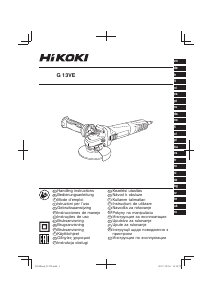
Посібник Hikoki G 14DBL Кутошліфувальна машина

Супутні товари

Пов'язані категорії

×
Download